Know your heart before it speaks.
Heart Health turns your iPhone into a heart rate monitor. Rest a fingertip on the camera and read your pulse, heart-rate variability, respiratory rate and stress — then log your blood pressure and oxygen and watch the trends build. No chest strap, no wearable.
Your heart, in one place
A quick reading whenever you want it, and the fuller picture over time.
Camera heart rate
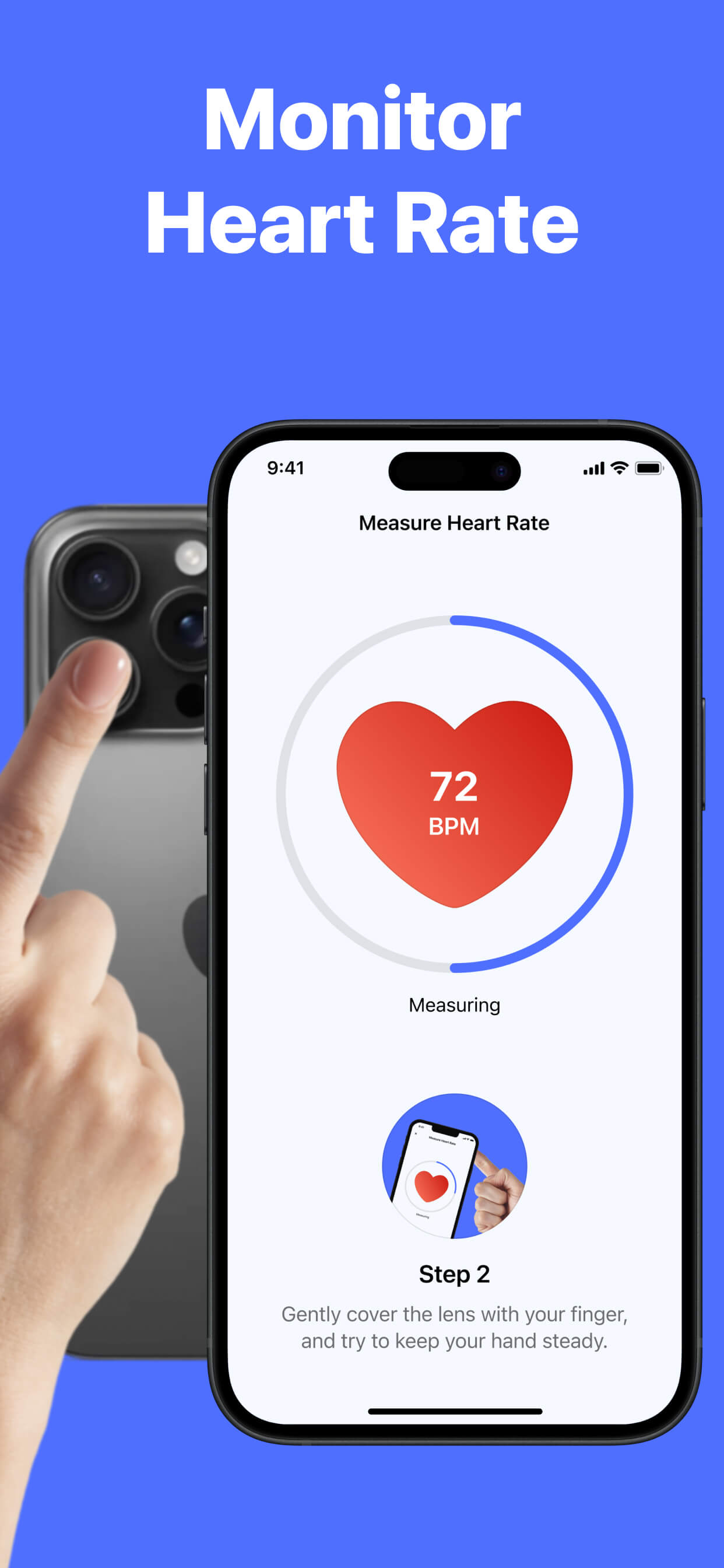
Cover the rear camera with a fingertip and read your pulse in about half a minute. No extra hardware — the phone in your pocket is the sensor.
HRV, stress & recovery
Beyond a single number: heart-rate variability, a stress read and a recovery signal, so you can tell a calm day from a taxing one.
Blood pressure & oxygen
Log your systolic/diastolic readings and blood-oxygen saturation next to your pulse, so your whole heart record lives in one app.
Respiratory rate
Each measurement also estimates your breaths per minute and a coherence score — small signals that add up to how your body is coping.
Trends over time
Daily records and simple charts turn one-off readings into a line you can actually follow — weekly and monthly.
Yours to keep
Your heart readings are stored on your device, and you don't need an account to measure. Take a check-in anywhere, any time.
How to measure your heart rate with your iPhone
Under a minute, start to finish — no setup, no gear.
- Get Heart HealthDownload it free from the App Store and answer a few quick questions about you.
- Cover the cameraRest a fingertip gently over the rear camera and flash so the lens reads a steady red.
- Hold stillBreathe normally for about 30 seconds while the app reads the pulse in your fingertip.
- See your reportGet your BPM, HRV, respiratory rate and stress — and watch the trend grow with each check-in.
Built to stay simple and yours.
A heart reading is personal. Measurements are taken and stored on your iPhone, and you can start using the app without creating an account. See exactly what the app does — and doesn't — on the Privacy Policy.
Questions people ask
Short answers, honestly given.
How do I measure my heart rate with my iPhone camera?
Open Heart Health, start a check-in and rest a fingertip over the rear camera and flash. The camera reads the tiny colour changes in your fingertip as blood pulses through it (a technique called photoplethysmography, or PPG) and turns that into your beats per minute over about 30 seconds.
What is HRV (heart-rate variability)?
HRV is the small variation in time between consecutive heartbeats. Higher variability is generally associated with rest and recovery, while lower variability can reflect stress or fatigue. Heart Health estimates HRV from each measurement so you can compare relaxed days with demanding ones.
Can the app measure my blood pressure?
The app does not read blood pressure from the camera. Instead you log your systolic and diastolic values (for example from a cuff) and blood-oxygen readings, so they sit alongside your pulse and trends in one place.
How accurate is a camera-based heart-rate reading?
Camera (PPG) heart-rate measurement works best when your finger fully covers the lens and flash, you hold still, and your hand is warm. Under good conditions it tracks resting heart rate closely, but it is a wellness tool, not a clinical instrument — treat it as a helpful estimate rather than a diagnosis.
Is Heart Health a medical device?
No. Heart Health is for informational and wellness purposes only and does not provide medical advice, diagnosis or treatment. If you have concerns about your heart, blood pressure or symptoms, please consult a qualified healthcare professional.
Does it need an internet connection or an account?
You can measure your heart rate and view your readings without creating an account, and your readings are stored on your device. Some features and analytics use a connection, but taking a check-in does not require you to sign up.
What is a normal resting heart rate?
For most adults a resting heart rate falls roughly between 60 and 100 beats per minute, and fit people are often lower. What matters more than one reading is your own trend over time — which is exactly what Heart Health is built to show you. This is general information, not medical advice.
Can I measure my heart rate without an Apple Watch or chest strap?
Yes. Heart Health uses your iPhone's rear camera and flash to read the pulse in your fingertip, so you don't need an Apple Watch, a chest strap or any other wearable. Anyone with a supported iPhone can take a reading in about 30 seconds.
Why did my heart rate measurement fail or show no reading?
It's almost always finger placement. Cover both the rear camera and the flash fully with your fingertip, press gently rather than hard, keep your hand still and warm, and stay out of very bright light. Cold hands and a moving finger are the most common reasons a reading won't lock in.
What is a good HRV score by age?
HRV varies widely between people and generally declines with age, so there's no single “good” number — a healthy value for one person can differ a lot from another's. What's most useful is following your own HRV trend over time rather than comparing to others. This is general information, not medical advice.
What is blood oxygen (SpO2)?
Blood oxygen, or SpO2, is the percentage of oxygen your red blood cells are carrying; around 95–100% is typical for healthy adults. In Heart Health you log your SpO2 readings alongside your pulse and blood pressure so your whole record lives in one place.
How often should I measure my heart rate?
A once-a-day check-in, ideally at a similar time and while resting, is plenty to build a useful trend. You can measure more often around workouts or stressful moments if you like — the app is designed for quick, repeatable readings whenever you want one.
Which iPhones does Heart Health work on?
Heart Health runs on iPhone with iOS 17 or later and uses the rear camera and flash to take a measurement. It's designed for iPhone.
Take your first reading today.
One fingertip, thirty seconds, and a picture of your heart that gets clearer every day.